
PIV Cards: From PKI to Modern Identity
Date: 2026-06-03
Author: Carolina Martinez, Vice President Americas and General Manager at Versasec
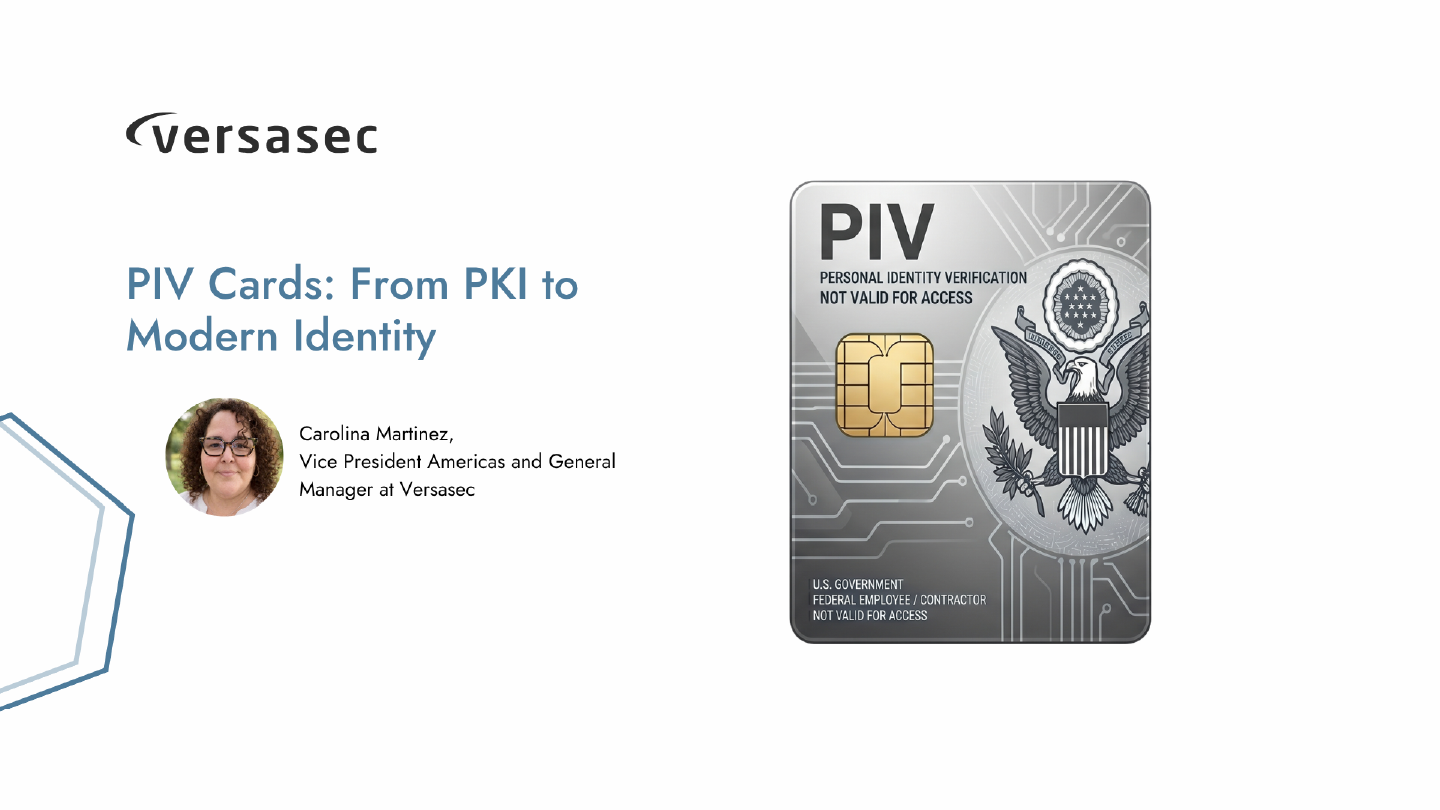
For years, organizations have relied on usernames, passwords, OTP, and SMS-based MFA to secure access to systems and facilities. But as cyber threats evolved, identity security needed something stronger, more standardized, and harder to compromise.
That evolution led to the rise of the PIV card.
What is a PIV Card?
Before we dive deep, let’s cover some basics. As defined by federal government standards, a Personal Identity Verification (PIV) card is a smart card credential used to verify a person’s identity for both physical and logical access. It combines multiple security factors into a single credential, including cryptographic certificates, PINs, and integrated biometrics such as fingerprint templates and a digital face image. PIV standards were created by the U.S. federal government under FIPS 201 and are mandatory across federal agencies and federal contractors. They are widely used by organizations that require high-assurance authentication.
In simple terms, a PIV card is an advanced identity credential offering maximum security to verify exactly who you are.
Unlike traditional passwords, PIV credentials are phishing-resistant and built around certificate-based authentication using PKI (Public Key Infrastructure).
The Evolution: From PKI to PIV
PKI laid the foundation for digital trust by enabling encryption, digital signatures, and certificate-based authentication. But early PKI deployments often lacked consistency in identity proofing, credential issuance, and interoperability between organizations.
After Homeland Security Presidential Directive 12 (HSPD-12) in 2004, the federal government pushed for a unified identity standard. That initiative became FIPS 201, the standard behind PIV.
PIV essentially standardized and operationalized PKI for identity credentials by adding:
- Strong identity proofing
- Standardized card formats
- Interoperability requirements
- Secure lifecycle management
- Multi-factor authentication
- Support for physical and logical access
Today, many organizations view PIV as the evolution of enterprise PKI into a full identity ecosystem.
Navigating the Flavors of PIV
The PIV ecosystem has expanded over time, and several related credential models now exist.
- PIV: The standard federal credential issued to all U.S. federal employees and contractors under FIPS 201.
- PIV-I (PIV-Interoperable): PIV-I extends PIV standards to non-federal organizations that need interoperability with federal systems. These credentials follow similar technical standards but may use different identity proofing models. Common users include contractors, state governments, first responders, and critical infrastructure organizations.
- PIV-D (Derived PIV): Derived PIV credentials are digital credentials derived from an existing PIV card and typically stored on mobile devices or modern authenticators. They enable secure authentication without requiring the physical smart card every time. FIPS 201-3 expanded support for derived credentials as mobile and remote work increased.
- CIV (Commercial Identity Verification): CIV applies many of the same concepts and technologies used in PIV, but for commercial enterprises that do not require federal interoperability or federal identity proofing standards.
- CAC (Common Access Card): The US Department of Defense’s smart credential. While technically different from a standard PIV card, CAC and PIV share many of the same architectural principles around PKI and smart card authentication.
 Why PIV Still Matters
 Why PIV Still Matters
As organizations move toward cloud and Zero Trust architectures, PIV remains highly relevant because it delivers:
- High assurance identity verification
- Strong phishing-resistant authentication
- Secure access to facilities and systems
- Digital signing and encryption
- Interoperability across environments
In many ways, modern passkeys and passwordless technologies continue the journey PIV began years ago: moving identity away from passwords and toward cryptographic trust.
Key Players in the PIV Market
Key players in the PIV market include: Entrust, HID Global, Idemia, Taglio, Thales, Versasec, and Yubico.
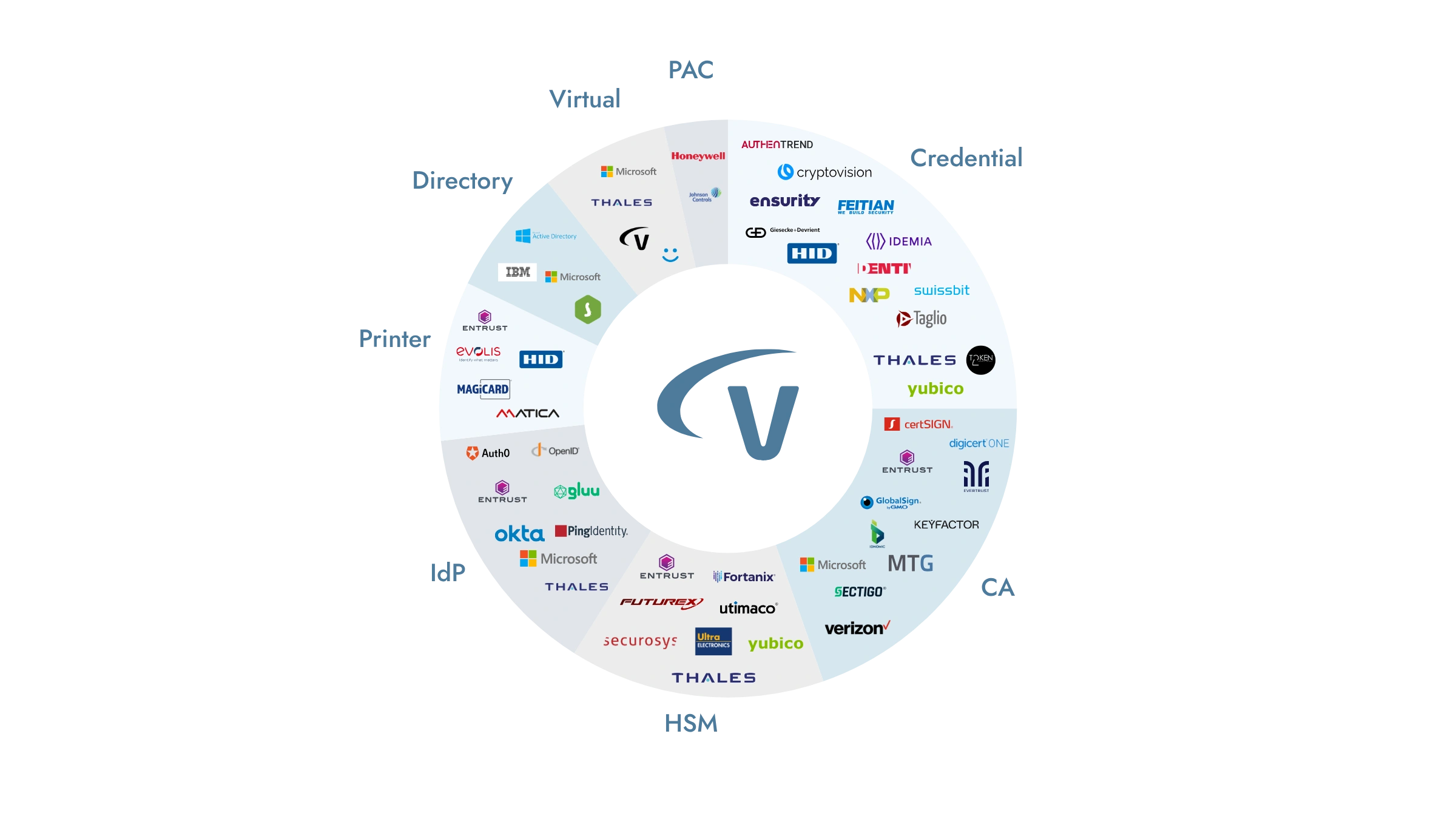
The Role of Credential Management Systems – vSEC:CMS
Behind every successful PIV deployment is a Credential Management System (CMS). A CMS is responsible for the issuance, provisioning, lifecycle management, renewal, revocation, and governance of PIV credentials and certificates. In many ways, it serves as the operational backbone of a PIV environment, helping organizations securely manage identities at scale while maintaining compliance with and interoperability across security policies.
At Versasec, we’ve seen firsthand how the role of the CMS has evolved far beyond simply issuing smart cards. Today, organizations need flexible credential management platforms that can bridge physical and logical access, support derived and virtual credentials, integrate with modern identity ecosystems, and help accelerate the move toward phishing-resistant and passwordless authentication.
This is precisely why we built vSEC:CMS. As an enterprise-grade credential management system, it transforms complex PIV deployments into a streamlined, automated workflow. By bridging the gap between legacy PKI and next-gen identity ecosystems, vSEC:CMS provides the orchestration layer organizations need to manage the entire credential lifecycle, whether on plastic, mobile, or the cloud, without the operational headache.
Final Thoughts
PIV started as a federal identity standard, but its impact has gone far beyond government. It helped shape how organizations think about trusted identity, strong authentication, and interoperable security.
And while the form factors may evolve, from smart cards to security keys, the core idea remains the same: Identity should be cryptographically trusted, strongly verified, and resistant to compromise.
About the Author

Carolina Martinez is the Vice President Americas and General Manager at Versasec. Having worked with smart cards and credentials since their early enterprise adoption, she has spent nearly three decades witnessing and shaping the evolution of identity security. An expert in credential management systems, phishing-resistant MFA, and PKI deployments, Carolina leverages her deep industry tenure to help global organizations bridge the gap between complex security architectures and practical, scalable business solutions.
vSEC:CMS
Our product suite provides all the software tools to administrate and manage credentials in a secure and convenient way.
Schedule a Strategic Call
Versasec provides enterprise credential management to accelerate phishing-resistant MFA. Our solutions enable customers to securely authenticate, issue and manage user credentials more cost effectively. Schedule a 1:1 Strategic Call With Our Identity Experts.
Job Openings
We are always looking for new exceptional persons to join our team! Find out more about our job openings.